Exposure
Found 1980s colour slide, aluminum, light, mmWave radar, microcontroller, counter
The light that lets you see this image is erasing it. It burns only while someone watches from a distance.
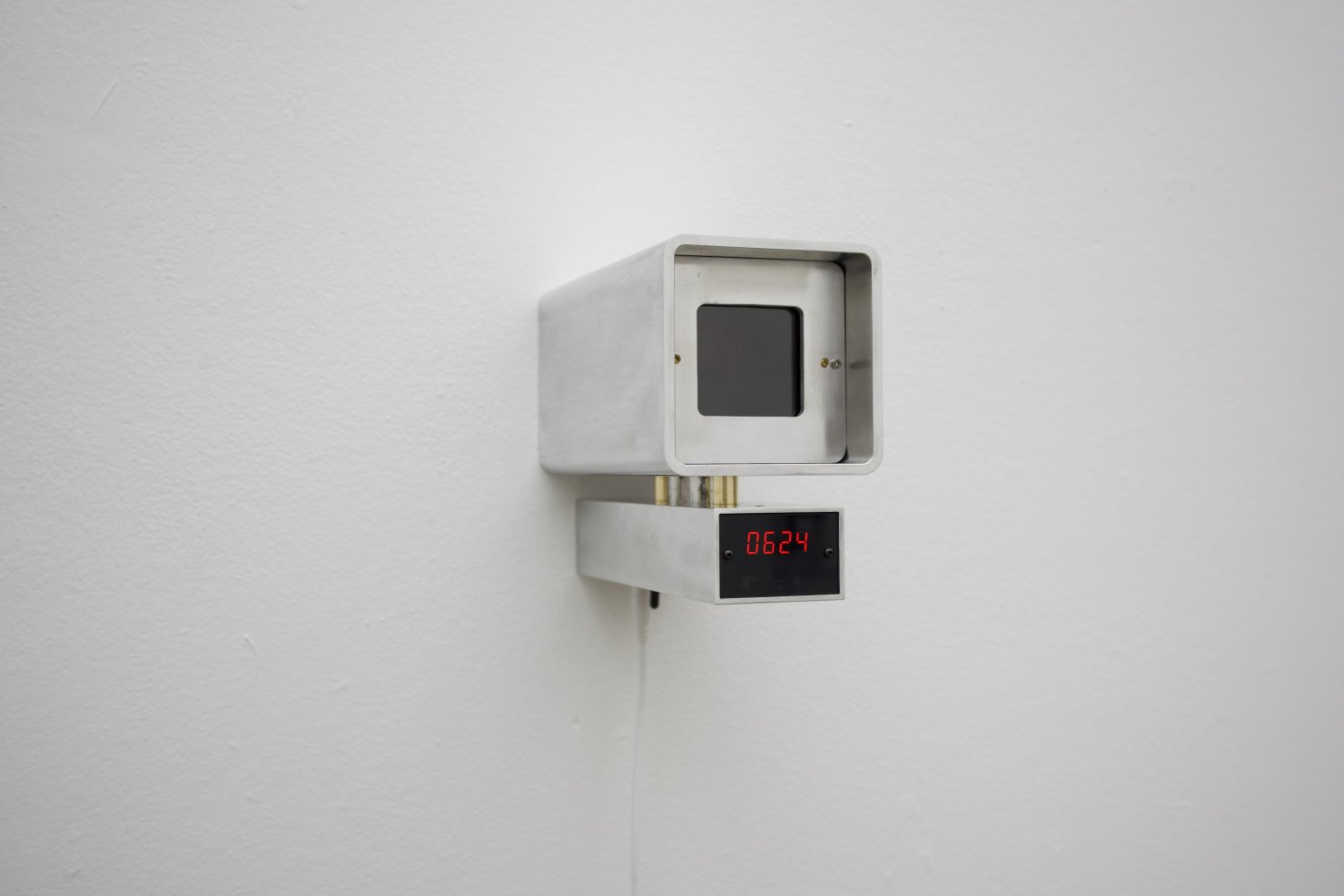
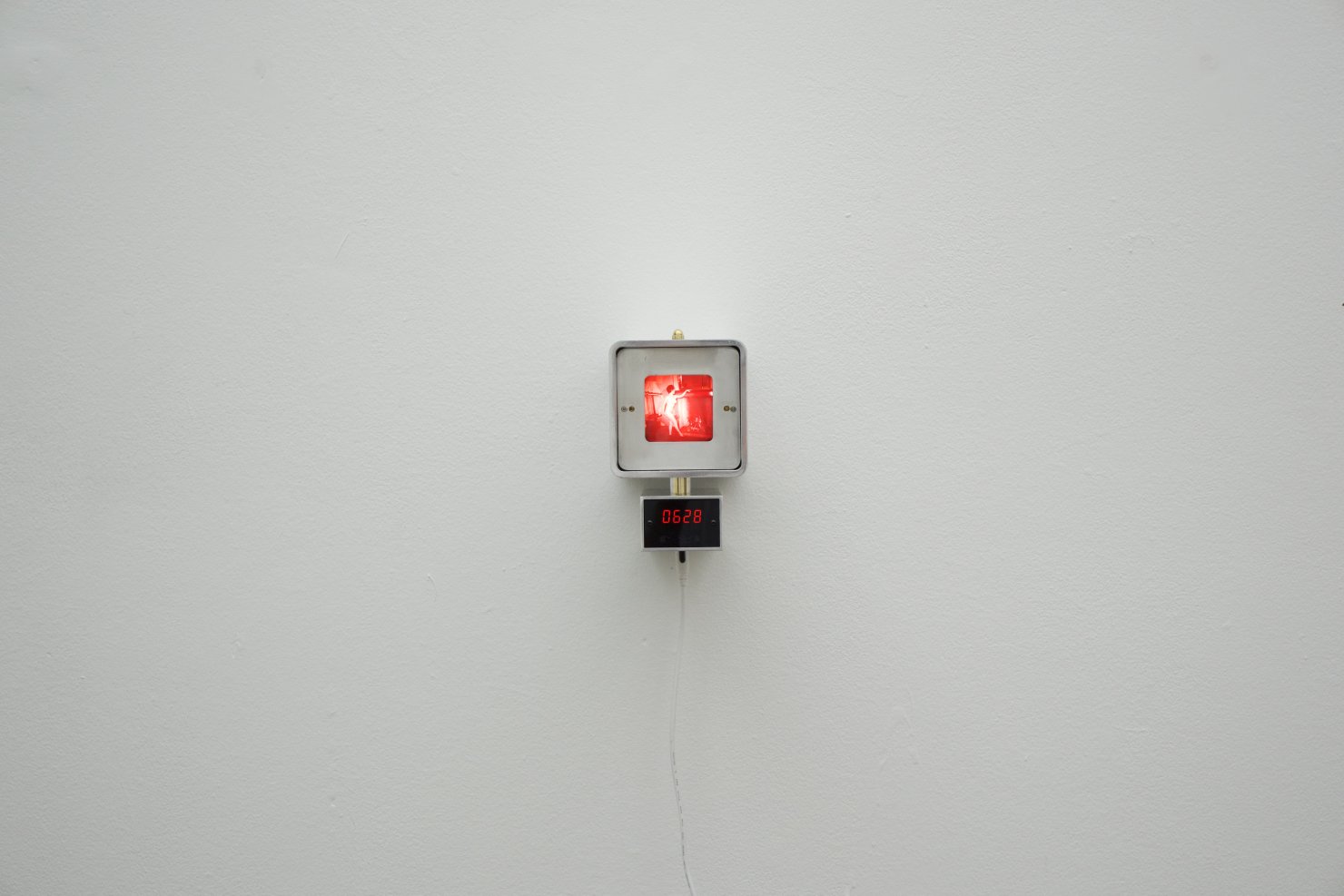
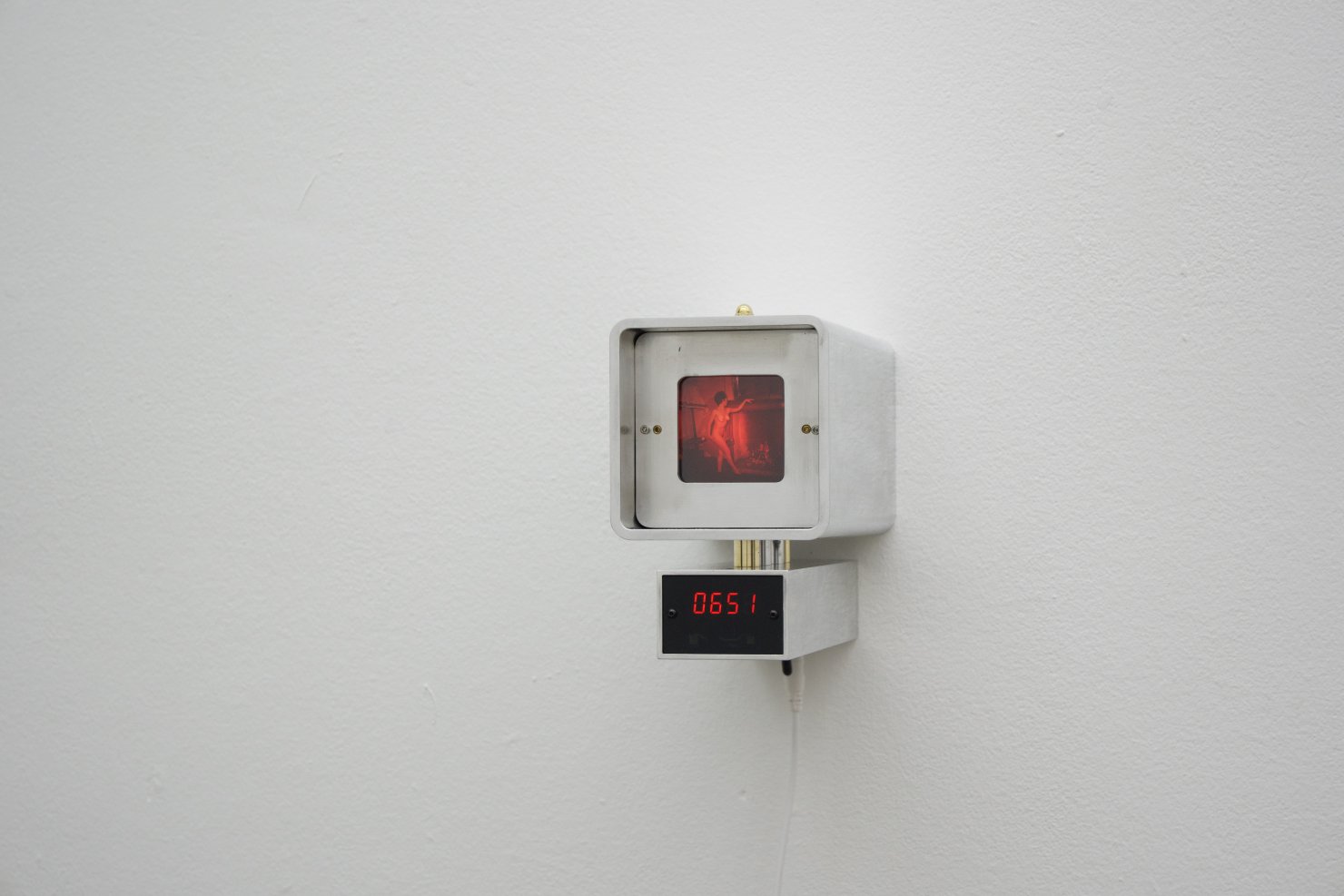
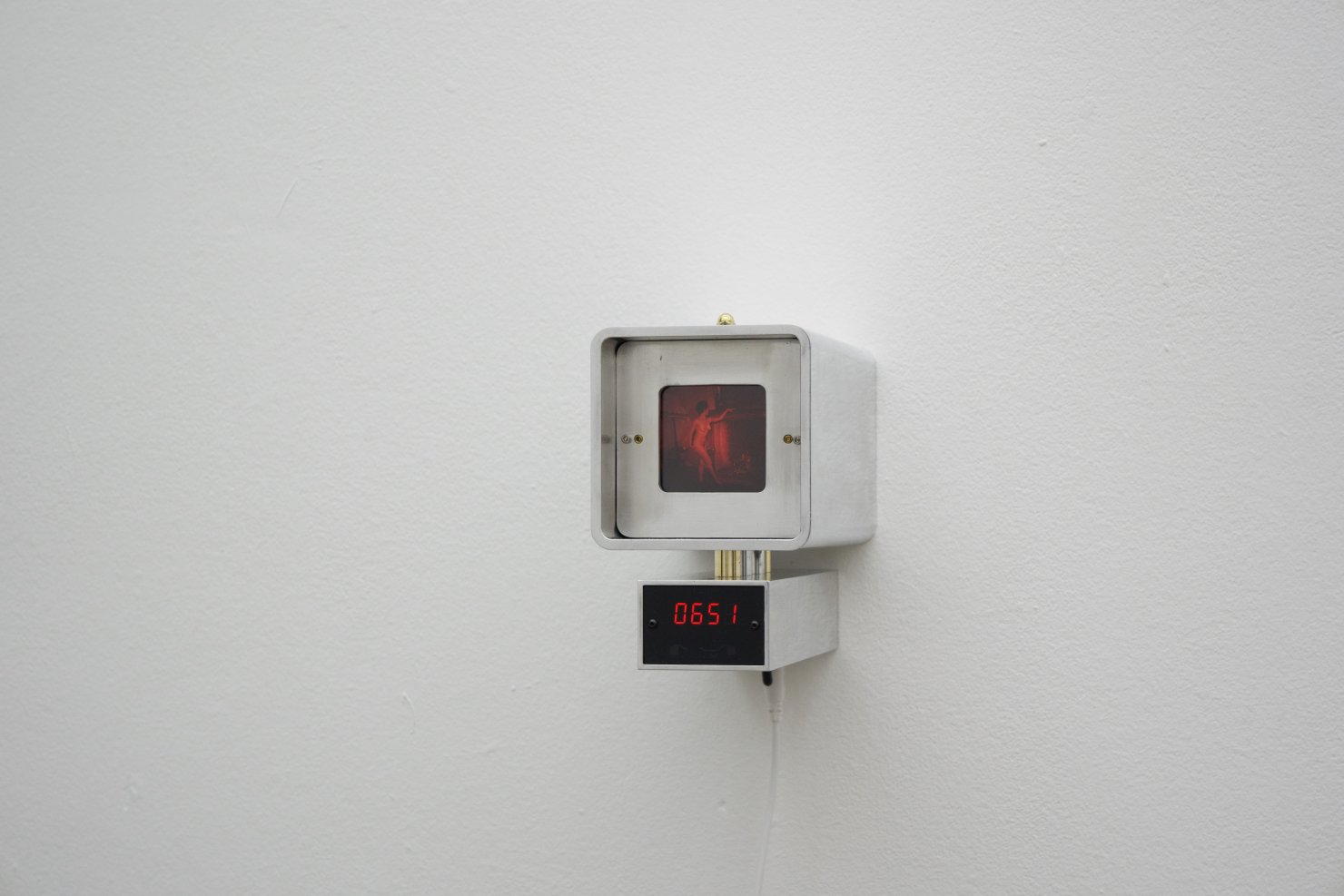
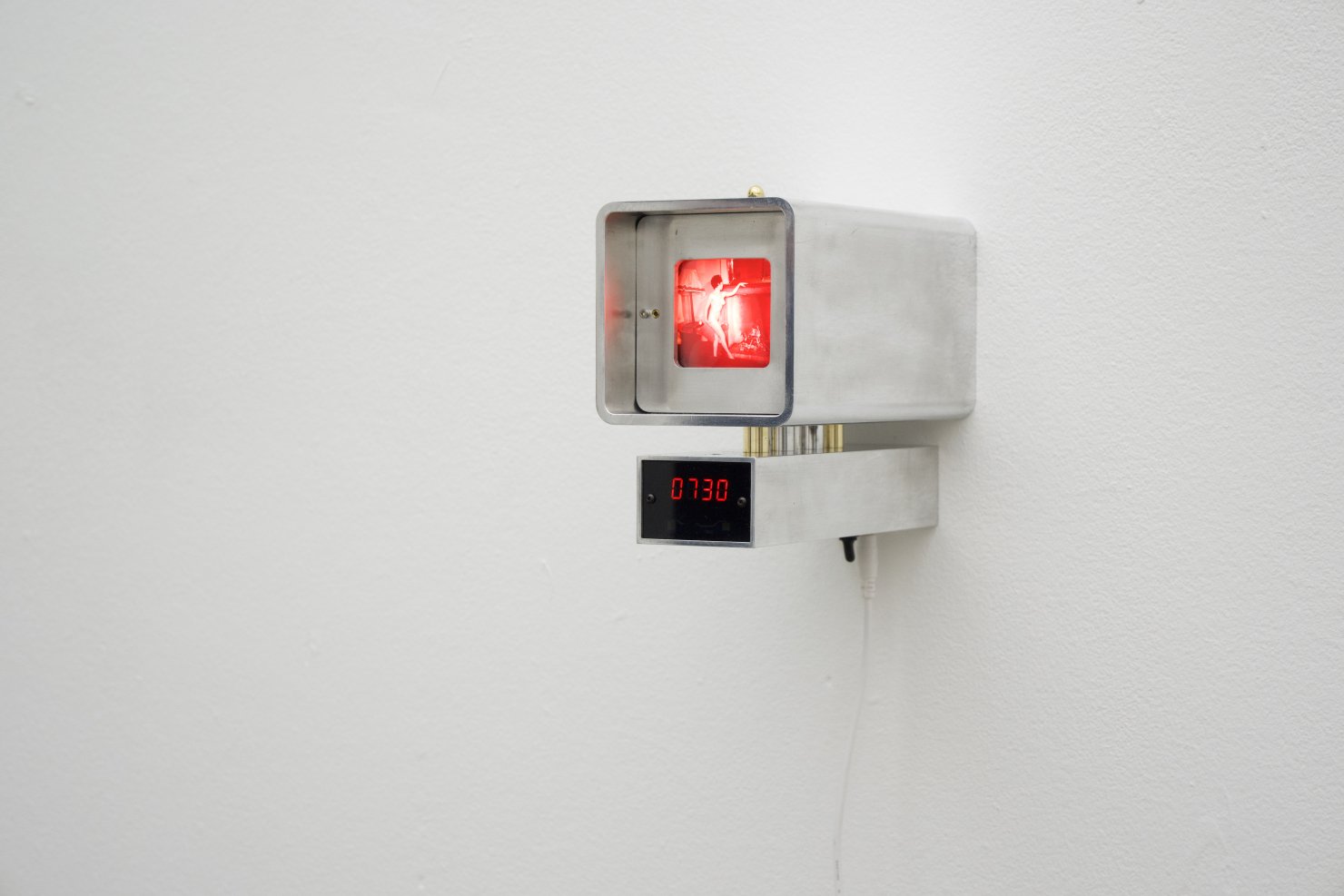
A single 7 × 7 cm colour slide, found, made in the 1980s, erotic, its subject unknown, is mounted in an aluminum box and lit from behind. The image appears only when someone is watching it.
A sensor measures the distance to the nearest viewer. Stand between 1.6 and 3 metres away, and the slide slowly emerges from the dark. Step closer to see it better, and the light withdraws within half a second. Leave, and it goes dark. The image can be seen, but only from a distance, the voyeur’s distance, and never well.
Every moment of that looking costs the image something. The dyes of colour slides fade under light : the same light that reveals the photograph is slowly destroying it. The slide has not been scanned. No copy exists. What fades is gone.
A counter below the image records the exposure in seconds as it happens. The accumulated total since the work was first shown is noted on the label and updated daily. The loss is real but invisible : no single visitor will see the image change, yet each adds to its disappearance.
The other six slides from the same find are kept sealed in a lead-lined enclosure beside the work, unseen and therefore preserved. Their only protection is that no one looks at them.
Exposure asks what it means to look at an image of someone who probably never agreed to be seen, and makes the viewer’s position measurable : watching from afar consumes, coming closer is refused, and only absence preserves.
Technical : steel stand, light box with 3 W LED (4000 K) behind an opal diffuser, 24 GHz mmWave presence radar, Arduino microcontroller, 4-digit LED counter, lead-lined archive box.